Volkswagen Group of America

Mixed reality prototyping for interior and exterior automotive concepts, mapping physical rigs to virtual cockpits to help Design and Engineering evaluate interactions early.
What I drove
Established and led VR/MR prototyping within Volkswagen Group’s Electronic Research Lab (ERL), building interactive systems to explore and communicate future automotive experiences across VW, Audi, and Porsche.
What I built
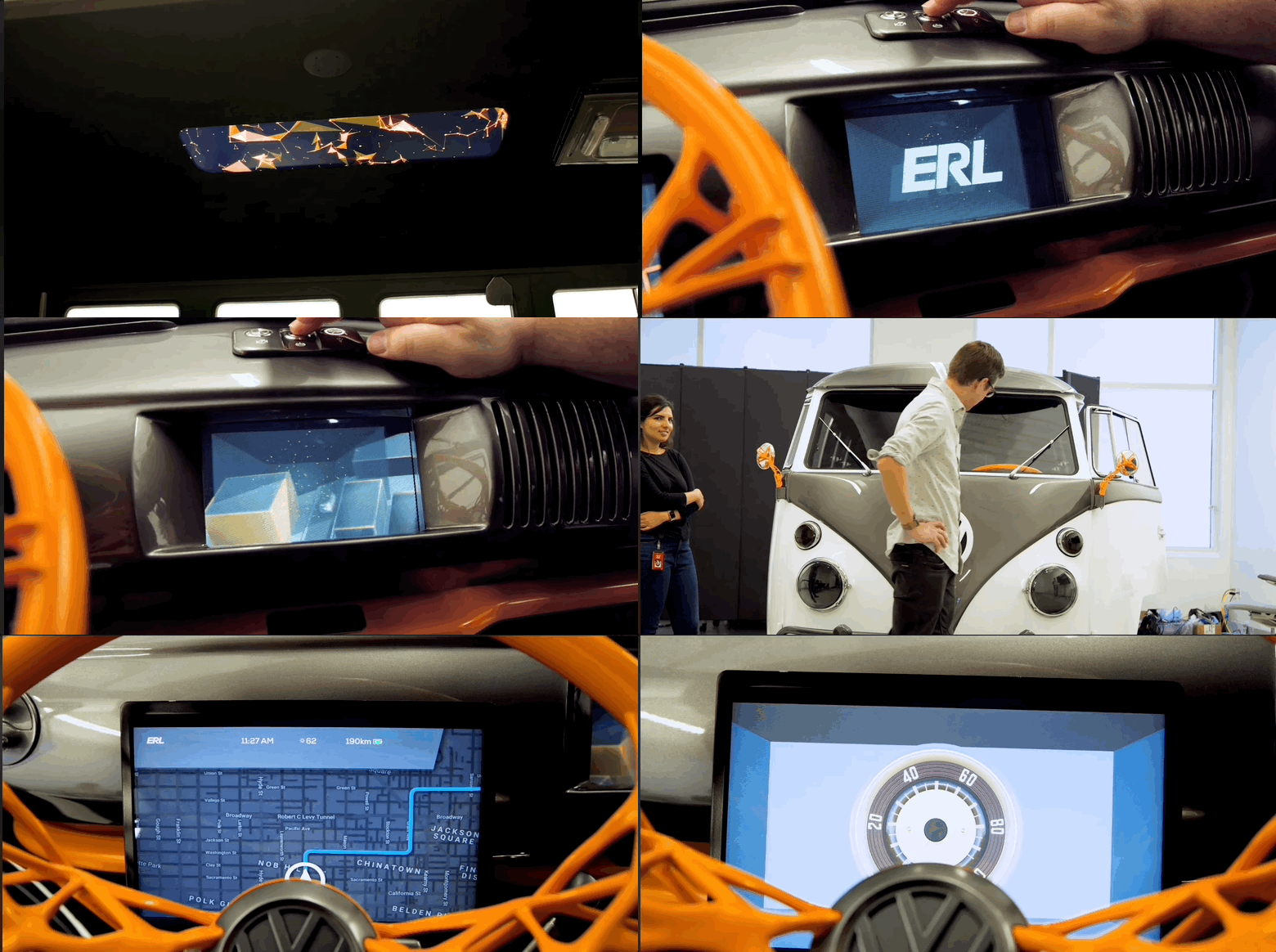
Developed real-time mixed reality prototypes using Unity, C#, and IoT systems, connecting physical vehicle components to virtual environments and simulating in-car interactions, instrument clusters, and system behaviors.
Result
Scaled the Mixed Reality Lab into a core ERL capability, expanding into video and animation, enabling teams across brands to evaluate concepts earlier, align faster, and de-risk interaction decisions before production.
Overview
First VR Design Specialist at Volkswagen Group’s ERL, responsible for introducing and scaling mixed reality as a prototyping and communication tool across multiple automotive brands.
Key Contributions
- Founded and scaled the Mixed Reality Lab as a long-term prototyping capability, including hardware setup, tooling strategy, and budget ownership.
- Built system-driven VR/MR prototypes in Unity (C#), modeling complete interaction loops from input to logic to feedback and rapid iteration.
- Implemented MQTT pipelines connecting real vehicle data to Unity simulations for real-time behavior prototyping and validation.
- Mapped physical components (levers, doors, seating rigs) to virtual cockpit systems to test interaction fidelity before production.
- Developed instrument cluster simulations by translating motion and visual assets into responsive 2D/3D real-time prototypes.
- Partnered with teams and leadership across VW, Audi, and Porsche to communicate and evaluate future vehicle experiences earlier in the process.
Press
Visuals


Constraints
Due to the proprietary nature of the work, this case study focuses on systems, methods, and prototyping practice rather than specific product outcomes.